Emergency Generator and Home Battery Backup Troubleshooting
Emergency generator repair considerations include checking symptoms, fuel and power connections, transfer equipment, battery storage, and safety controls; GMB Electric diagnoses the electrical system and repairs the underlying fault.
Request an Estimate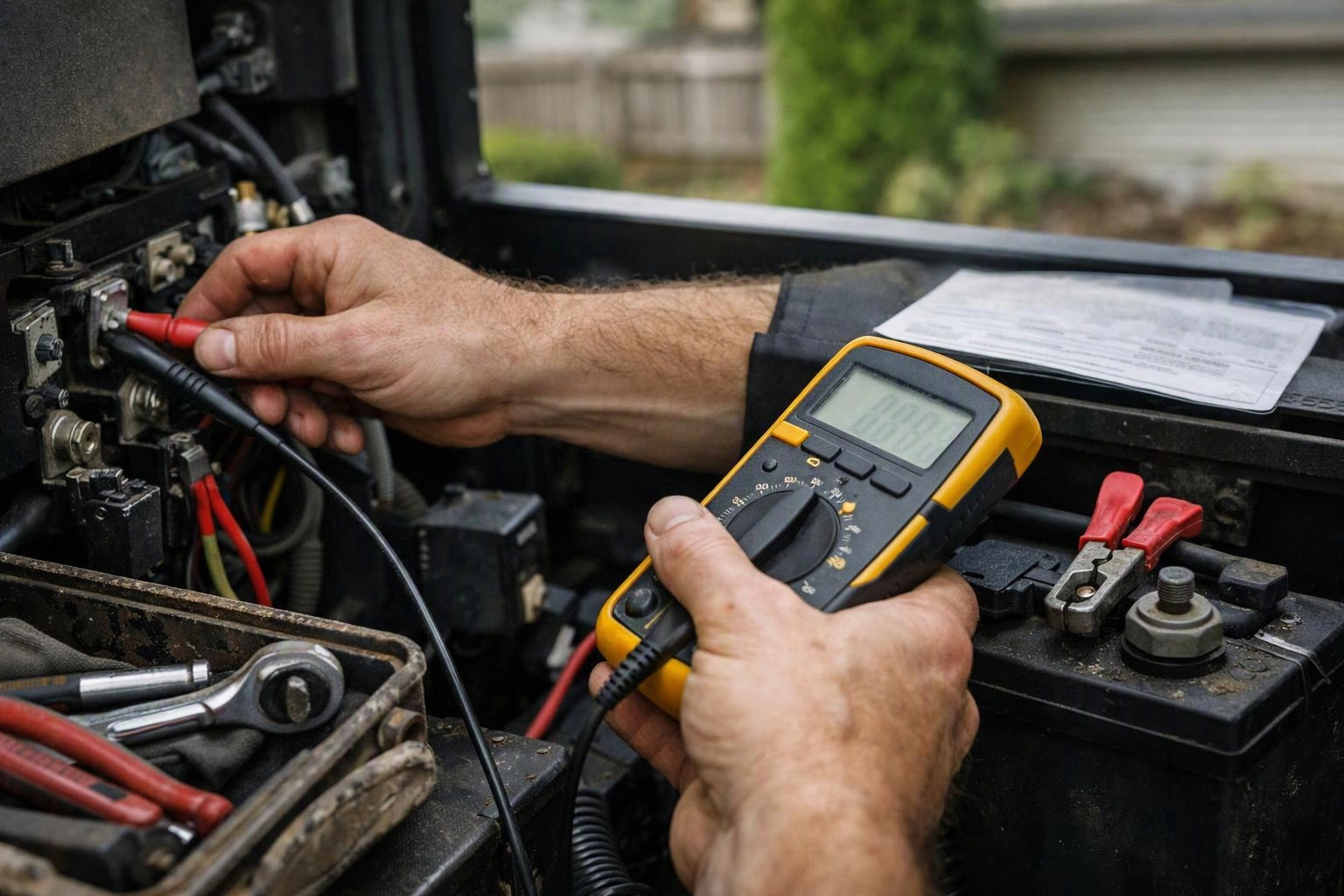
What Emergency Generator Repair Considerations Matter First?
Emergency generator repair considerations begin with the symptom, the system's operating state, and the risk of energizing equipment that has an unresolved electrical fault. GMB Electric traces the problem through the backup power system before we recommend a repair.
An emergency generator may have an engine, alternator, control panel, disconnect, and transfer equipment. A home battery backup may use battery modules, an inverter, and a battery management system. We identify which part is involved before electrical troubleshooting begins.
The automatic transfer switch also matters because it controls the change between utility power and generator power. Safety controls can stop operation when the system detects an unsafe voltage, overload, wiring fault, or other condition.
What Signs Show That Backup Power Needs Attention?
Backup power needs attention when the system shows a repeated startup, transfer, battery, fuel, or electrical symptom. Record what the equipment displays and when the symptom occurs so we can use that information during repair diagnosis.
We treat repeated alarms and shutdowns as useful clues, not as problems to hide with repeated resets. A symptom that returns after a reset needs inspection of the full electrical pathway.
Why Will an Emergency Generator or Battery System Fail?
Emergency generators and battery systems fail when a starting, fuel, control, conversion, storage, or connection component cannot operate safely. Our team separates the original fault from damage caused by repeated starting attempts or incorrect resets.
We inspect the related components because replacing one part may not correct an upstream wiring or control problem. Our diagnosis follows the power path from the source through the equipment and into the connected loads.
What Can You Safely Check Before Calling for Repair?
You can check visible power, fuel, breaker, battery, and control-panel conditions without opening energized equipment or bypassing a safety control. GMB Electric uses these observations to begin a safer repair diagnosis.
Do not open energized equipment, bypass a safety control, test exposed conductors, or work inside the electrical panel. We handle voltage testing, load testing, and repairs that require access to energized parts or internal components.
How Does GMB Electric Diagnose Backup Power Problems?
GMB Electric diagnoses backup power problems by tracing the symptom through the generator or battery unit, transfer equipment, distribution panel, wiring, and connected loads.
Our electrical troubleshooting starts with the reported symptom, error history, operating state, and system documentation. We then inspect the generator installation or home battery backup installation for visible damage, connection problems, and compatibility concerns.
We use voltage testing and controlled load testing when the equipment can be tested safely. We check whether the automatic transfer switch receives the correct signals and whether the electrical panel distributes backup power as intended.
When repair is appropriate, our Generator Repair work addresses the diagnosed fault. We also perform home battery backup repair when the inverter, battery management system, wiring, or connected equipment is involved.
Which Repair Considerations Affect the Work and Quote?
The repair work and quote depend on the failed component, system configuration, access, parts compatibility, electrical damage, and whether testing identifies additional faults. We explain the recommended work after our inspection and repair diagnosis.
| Repair consideration | Why it matters |
|---|---|
| Generator repair | The fault may involve the engine, controls, fuel system, alternator, or starting circuit. |
| Battery backup repair | The inverter, battery module, battery management system, or connection may affect the repair path. |
| Transfer switch | A transfer fault can prevent backup power from reaching the electrical panel even when the generator runs. |
| Electrical panel and wiring condition | Heat damage, loose connections, or an overloaded circuit can affect safety and system performance. |
| System compatibility | Replacement parts and controls must match the equipment, transfer method, and connected loads. |
Our quote reflects the work needed for the diagnosed condition and the parts that match the existing system. We explain whether repair, replacement, wiring correction, or further testing is the appropriate path.
How Can You Prevent Emergency Backup Failures?
Preventive maintenance reduces avoidable backup power problems by keeping the generator, battery system, controls, and connections ready for operation. We can use the equipment history and manufacturer instructions to guide maintenance decisions.
We document findings that affect future service and explain which maintenance tasks belong in the system record. Regular inspection also helps reveal changes in connected loads or electrical panel conditions.
How Should You Prepare an Electrical System for Emergency Service?
Preparing an electrical system for emergency service means preserving the fault information, keeping equipment accessible, and avoiding unsafe resets or disassembly.
Keep the electrical service panel, generator disconnect, transfer equipment, and battery isolation point accessible. Do not remove covers or isolate equipment unless the manufacturer instructions clearly permit the action and the system is in a safe state.
Save error history, alarm messages, recent changes, and the conditions surrounding the utility outage. Our crew uses these details to connect the visible symptom with the equipment and connected load that caused it.
Keep system documentation, equipment labels, and manufacturer instructions available. Clear the work area so we can inspect the system safely and complete testing without moving household items around energized equipment.
What Should You Do After an Emergency Electrical Repair?
After an emergency electrical repair, confirm that the corrected system transfers safely, supports the intended loads, clears relevant alarms, and receives documented operating guidance.
We explain the test results and operating steps before closing the repair. If the system shows a new alarm, unusual sound, odor, or repeated shutdown, use a safe shutdown and contact GMB Electric for follow-up diagnosis.
Questions About Generator and Battery Backup Troubleshooting
Can a generator fail to start because of its battery?
Yes, a generator can fail to start because its starter battery is discharged, damaged, disconnected, or not receiving a proper charge. GMB Electric checks the starting circuit and related controls before replacing a battery.
What does a generator error code mean?
A generator error code identifies a condition detected by the control system, such as a starting, fuel, voltage, temperature, or transfer problem. The code is a diagnostic clue, so we compare it with system testing before deciding on a repair.
Can a home battery backup work when the electrical panel has a fault?
No, a home battery backup may shut down or remain isolated when an electrical panel fault creates an unsafe condition. We diagnose the panel, wiring, inverter, and connected loads before restoring backup operation.
Should you reset a generator after it shuts down?
You should reset a generator only when the manufacturer instructions allow it and the cause is understood. Repeated resets can hide a safety control response or worsen an unresolved electrical fault.
What information should you give GMB Electric during an emergency backup power call?
Give GMB Electric the equipment type, symptom, error code, recent utility outage, alarm history, unusual sounds or odors, and any recent electrical changes. Tell us whether the unit will not start, fails to transfer, or shuts down under load.
Contact GMB Electric for generator repair, battery backup repair, electrical troubleshooting, and safe post-repair testing when backup power is not operating as expected.
Related Resources
Emergency Electrician Cost Factors: What Affects a 24-Hour Electrical Repair Quote?
What It CostsGenerator Installation Cost Factors: Equipment, Wiring, and Site Requirements
Everything About ItHow to Choose an Emergency Electrician in Indianapolis
Compared ToLocal Specialist vs National Electrical Troubleshooting Providers in Indianapolis: Cost & Service Compared