
What Is a Bidirectional Inverter?
A bidirectional inverter is a power conversion device that moves electrical energy between direct current and alternating current in either direction. It can convert battery power into usable building power and convert alternating-current power back into direct current for battery storage. This two-way function supports electric vehicle charging, vehicle-to-home systems, and battery backup equipment.
Quick Facts About Bidirectional Inverter
Category
Power conversion equipment
Used for
Battery charging and discharge
Common confusion
Often confused with a one-way inverter
Often discussed with
Bidirectional charging system troubleshooting
Key Takeaways About Bidirectional Inverter
- Energy can move between batteries and electrical loads.
- The inverter supports charging and discharging functions.
- A bidirectional inverter is not the same as a charger.
How Bidirectional Inverter Works
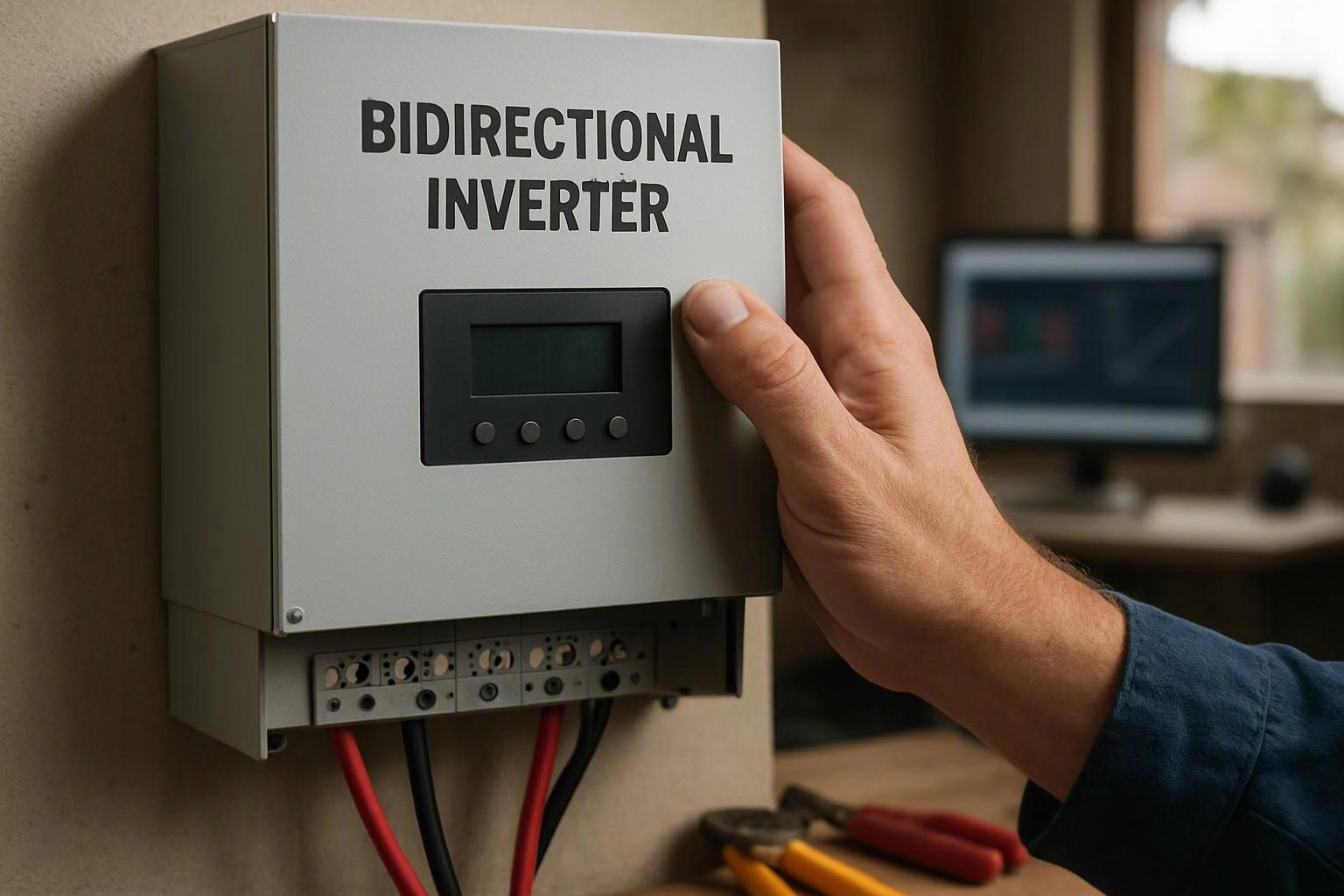
A bidirectional inverter changes direct-current energy from a battery into alternating-current energy for a building or connected equipment. During charging, the conversion runs in the opposite direction, so alternating-current power becomes direct-current power stored in the battery. Control circuitry manages the direction of energy flow and coordinates the connected charging system.
Related glossary terms: Battery Management System, Charge Port, Electrical Grounding.
In a bidirectional charging system, the inverter must communicate with the vehicle, battery, and electrical equipment. A fault in any connection can interrupt charging, prevent discharge, or create unexpected operating behavior. Troubleshooting may involve checking system status messages, inspecting wiring connections, and confirming that the inverter receives the correct power and control signals. A Battery Management System may also affect whether the battery accepts or releases energy.
From the GMB Electric team
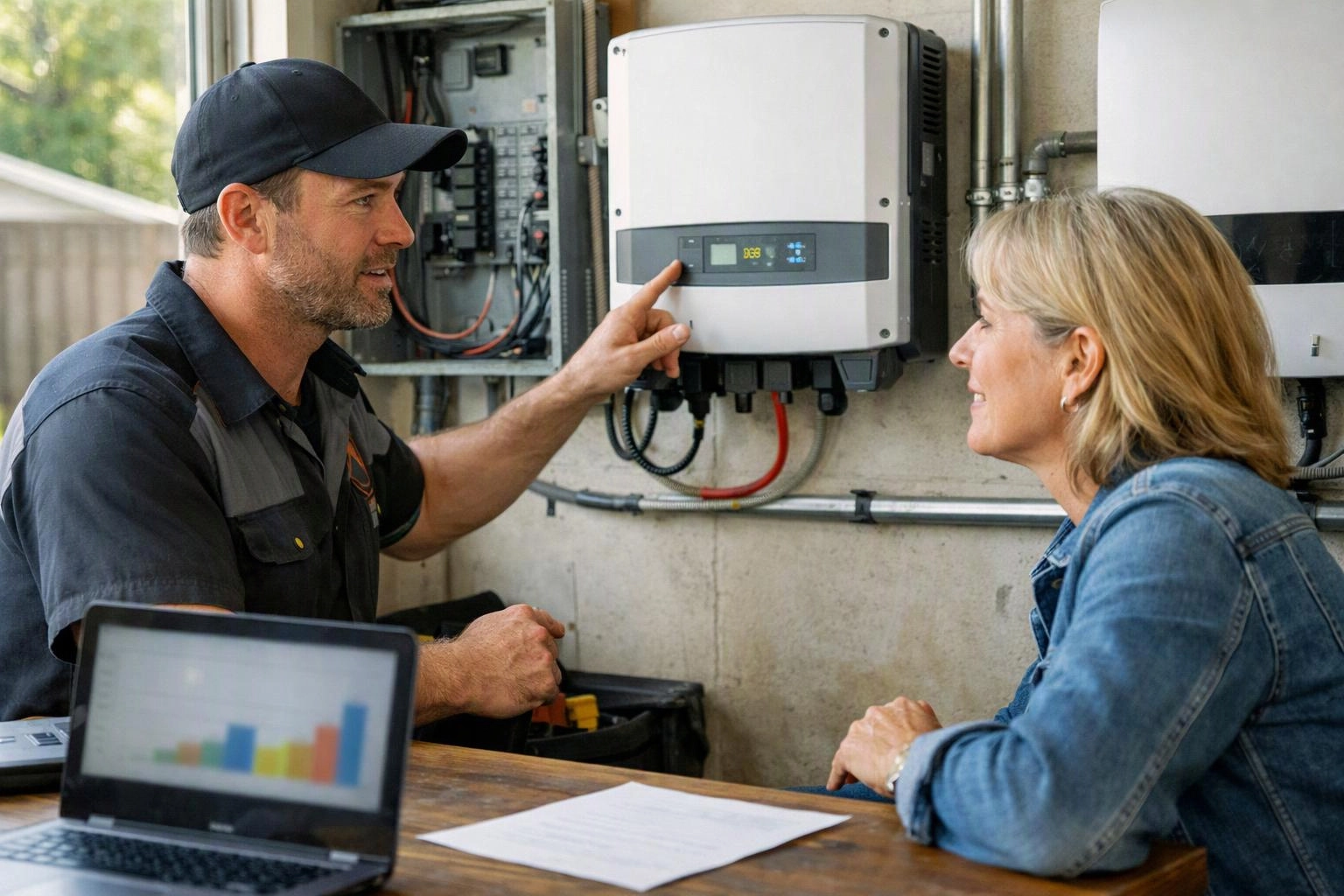
When we troubleshoot a bidirectional inverter, we check the power path and the control signals that coordinate charging and discharge. Our team also reviews system fault messages and examines connections between the inverter, battery, vehicle, and building equipment. These checks help separate an inverter fault from a wiring or communication problem.
Bidirectional Inverter in Practice: A Real-World Example
A homeowner has a vehicle connected to a bidirectional charging system, but the battery will not supply power to selected home circuits. We inspect the inverter status, connection points, and control communication to identify whether the issue affects conversion, wiring, or system coordination.
Related Services
Related Terms
Battery Management System
Battery Management System is an electronic control system that monitors and manages rechargeable battery cells. It…
Charge Port
A charge port is the physical connection point on an electric vehicle where charging equipment transfers…
Electrical Grounding
Electrical Grounding is the intentional connection of electrical equipment and systems to the earth through a…
Voltage Drop
Voltage Drop is the reduction in electrical potential that occurs as current travels through a conductor…
GMB Electric
Have Questions About Bidirectional Inverter?
Contact GMB Electric for practical guidance on Bidirectional Inverter and related 24 hour electrician work in Indianapolis.