
What Is Electrical Grounding?
Electrical Grounding is the intentional connection of electrical equipment and systems to the earth through a conductive path. The path helps direct unwanted electrical current away from people and equipment during a fault. Grounding also establishes a stable reference point for voltage and supports the operation of protective devices.
Quick Facts About Electrical Grounding
Category
Electrical safety system
Used for
Fault-current paths and voltage reference
Common confusion
Grounding and neutral conductors serve different roles
Also called
Earthing, Grounding
Often discussed with
Electrical Safety Inspection, Electrical Code Correction
Key Takeaways About Electrical Grounding
- Grounding connects electrical systems to the earth.
- A grounding path carries fault current away from equipment.
- Grounding is not the same as a neutral connection.
How Electrical Grounding Works
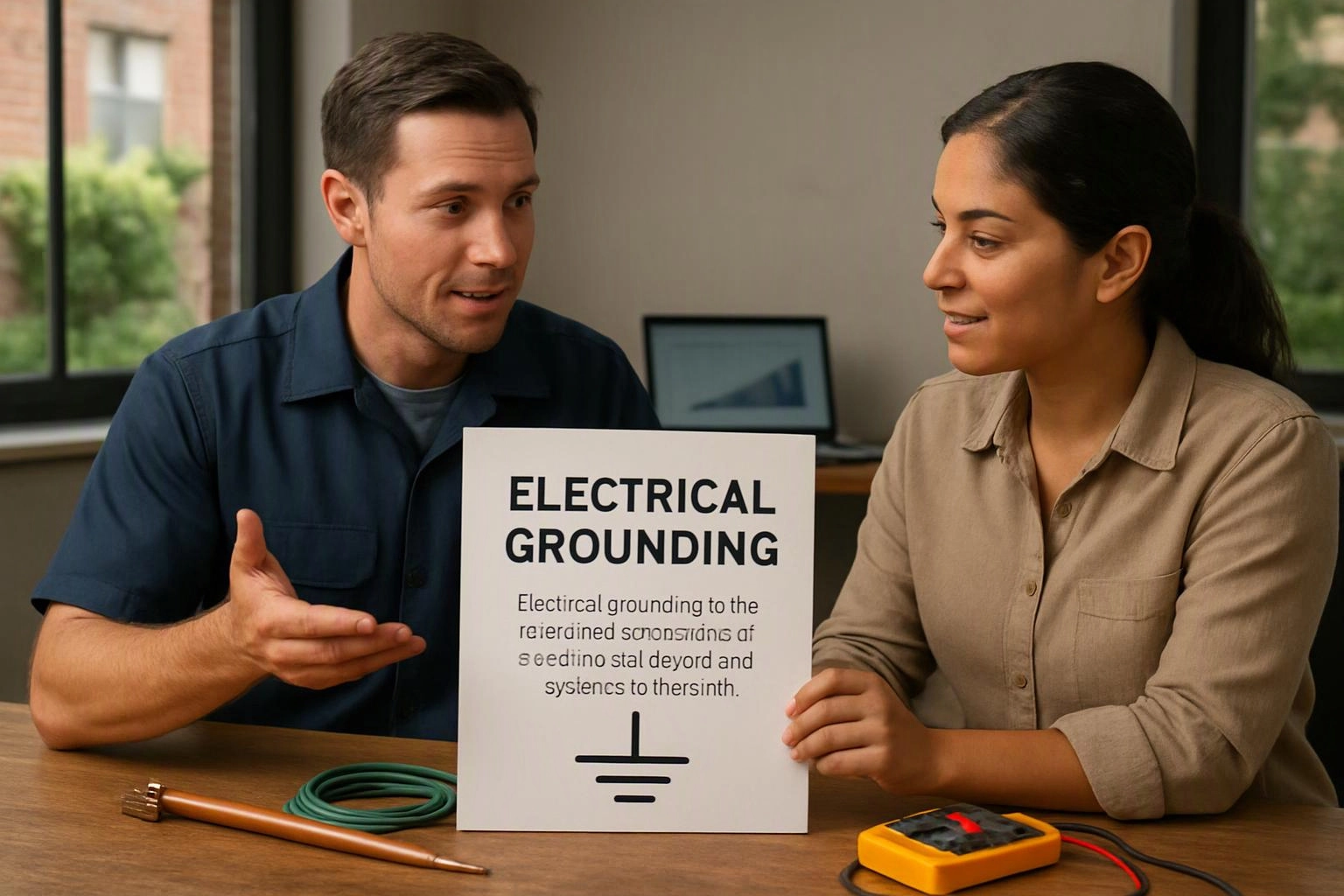
Electrical grounding connects a circuit or electrical enclosure to the earth through conductors and bonding connections. During normal operation, grounding conductors usually carry no current. If insulation fails and energized wiring touches metal, the grounding path directs fault current toward the source.
Related glossary terms: Ground Fault Protection, Neutral Wire, Service Disconnect.
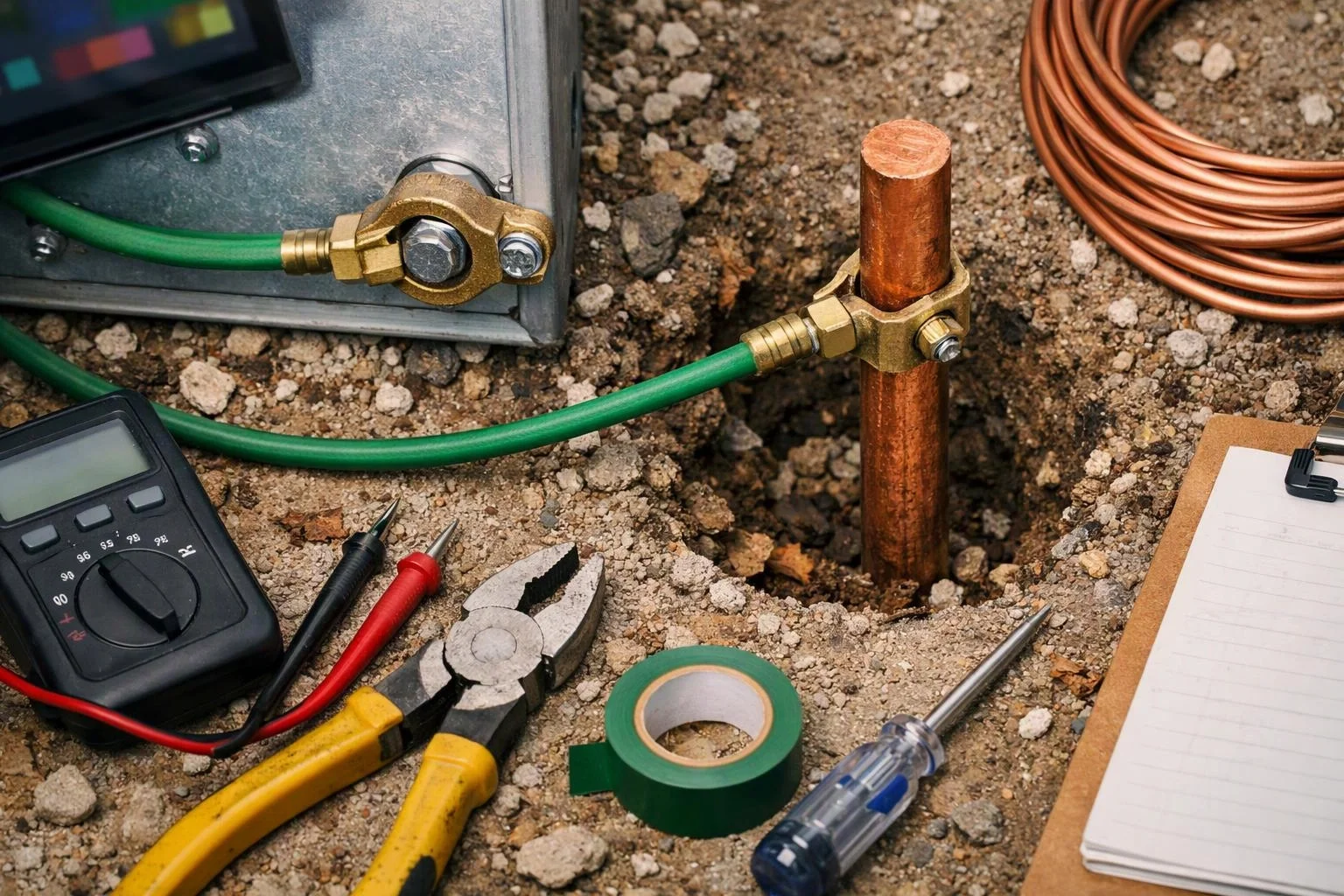
The resulting current can help a circuit breaker or fuse respond and disconnect the affected circuit. Grounding also bonds metal parts together, which helps reduce unwanted voltage differences between accessible equipment. A grounding electrode system connects the electrical system to the earth, while equipment grounding conductors connect circuit enclosures and devices to that system.
From the GMB Electric team
When we inspect grounding during an Electrical Safety Inspection, we trace the grounding path from service equipment through branch circuits and connected devices. We check bonding points, grounding conductors, and equipment enclosures for a continuous path. Our team also considers whether the grounding arrangement matches the installation.
Electrical Grounding in Practice: A Real-World Example
During an Electrical Safety Inspection, we may find a metal receptacle box without a reliable equipment grounding connection. We trace the circuit, inspect its bonding points, and identify the condition so the grounding path can be corrected.
Related Terms
Ground Fault Protection
Ground Fault Protection is a protective function that detects when electrical current leaves its intended path…
Neutral Wire
A neutral wire is a circuit conductor that carries current back to the electrical panel from…
Service Disconnect
Service Disconnect is the main device that separates a building’s electrical system from the utility supply…
Continuity Test
A continuity test is an electrical check that determines whether a complete path exists between two…
GMB Electric
Have Questions About Electrical Grounding?
Contact GMB Electric for practical guidance on Electrical Grounding and related 24 hour electrician work in Indianapolis.