What Is a Fuse?
A fuse is a protective electrical device that contains a metal link designed to melt when current exceeds its safe limit. The melted link opens the circuit and stops power from reaching connected wiring. Fuses protect against excessive current, but they must be replaced after they operate because they cannot be reset. For more detail, see Electrical Panel Replacement Cost Factors: Size, Scope, and Materials in Indianapolis.
Quick Facts About Fuse
Category
Overcurrent protection device
Used for
Protecting electrical circuits and wiring
Common confusion
Confused with a resettable circuit breaker
Also called
Electrical fuse
Often discussed with
Fuse Box Replacement, Electrical Troubleshooting
Key Takeaways About Fuse
- A fuse opens a circuit by melting a metal link.
- A blown fuse requires replacement before the circuit can operate.
- A fuse is not the same as a resettable circuit breaker.
How Fuse Works
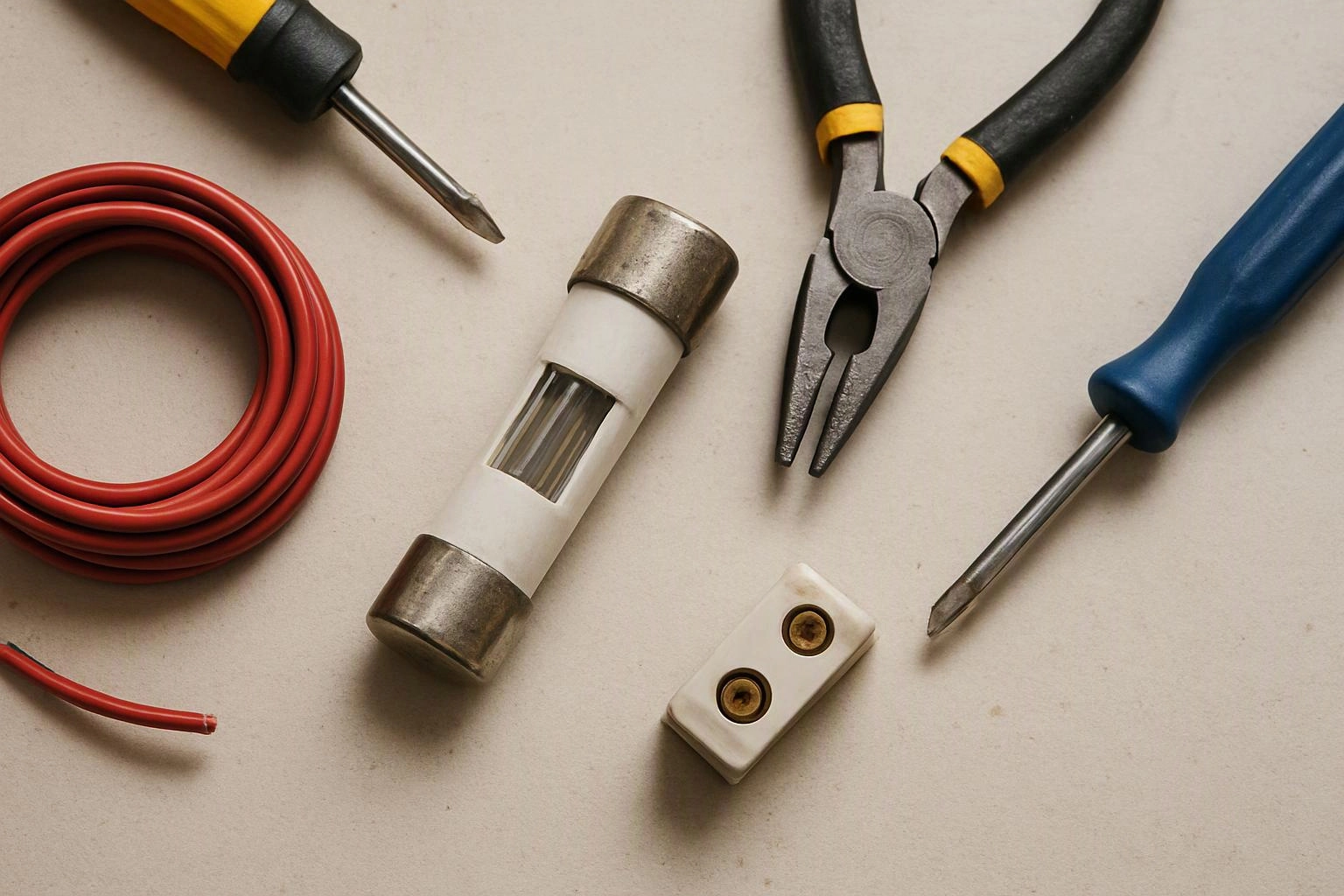
A fuse carries electrical current through a metal link selected for the circuit. Excessive current heats the link until it melts, which opens the circuit and stops the flow. The fuse rating describes how much current the fuse is intended to carry before operating. The fuse type and physical size must match the equipment and circuit.
Related glossary terms: Circuit Directory, Short Circuit, Electrical Grounding.
A blown fuse often points to an overload, a short circuit, or a fault in connected equipment. Replacing the fuse restores protection only when the underlying electrical condition has been addressed. A circuit breaker performs a similar protective function but can usually be reset after it trips. Fuse box replacement may be considered when the existing enclosure, connections, or protective components no longer suit the electrical system.

From the GMB Electric team
When we inspect a fuse, we check the fuse condition, its rating, and the surrounding connections. We also look for signs of overheating or a recurring circuit problem before discussing fuse box replacement. Our team treats a blown fuse as a symptom that may require broader electrical troubleshooting.
Fuse in Practice: A Real-World Example
A homeowner notices that a lighting circuit loses power after several devices operate at once. The fuse may have opened the circuit, so a technician checks the load, wiring, and fuse box before selecting a proper replacement or recommending fuse box replacement.
Related Services
Related Terms
Circuit Directory
A circuit directory is a labeled guide inside or beside an electrical panel that identifies which…
Short Circuit
A Short Circuit is an unintended electrical path with very low resistance between points at different…
Electrical Grounding
Electrical Grounding is the intentional connection of electrical equipment and systems to the earth through a…
Main Breaker
A Main Breaker is the primary circuit breaker in an electrical panel that controls power entering…
GMB Electric
Have Questions About Fuse?
Contact GMB Electric for practical guidance on Fuse and related 24 hour electrician work in Indianapolis.