Skip to content

Bidirectional Charging System Troubleshooting in McCordsville, Indiana

Low battery capacity can stop bidirectional charging in McCordsville before power transfer begins. We check the vehicle, charger, and system settings to find the fault.

Licensed & InsuredWarranty AvailableSame-Day ServiceUpfront, Transparent Pricing

Quick Summary: Bidirectional Charging Troubleshooting in McCordsville, Indiana

Bidirectional charging system troubleshooting in McCordsville is provided by GMB Electric for vehicle, charger, cable, and utility setting faults. Our 24-hour electrical service covers homeowners and businesses throughout Indianapolis and surrounding communities.

  • What we do: GMB Electric provides bidirectional charging system troubleshooting for McCordsville, Indiana, including checks of vehicle capacity, charger compatibility, cables, and utility settings.
  • What is included: Key capabilities include fault tracing, connection checks, charger testing, control setting review, and electrical safety checks.
  • What you get: The customer receives a clear fault finding and a practical decision about repair, adjustment, or further electrical work.

Why won't bidirectional charging start when the vehicle shows a low battery?

Low battery capacity can prevent bidirectional charging from starting because the vehicle may block power transfer to protect its reserve. The vehicle state, charger limits, cable connection, and utility settings need review before the next repair step.
Bidirectional Charging System Troubleshooting in McCordsville

Bidirectional charging system troubleshooting focuses on a specific buyer problem: power transfer will not start, stops early, or shows a fault. The work suits homeowners, property managers, and businesses with an electric vehicle and bidirectional charging equipment.

The first decision is whether the issue comes from the vehicle, charger, cable, utility settings, or the building's electrical system. We trace the symptom and explain which part needs attention. This helps you decide between a setting change, a repair, further testing, or a separate installation service.

  • Check the vehicle's charge state and system warnings before testing the charger.
  • Inspect the bidirectional charger and cable connection for visible faults.
  • Review utility and control settings that affect power transfer.
  • Test related electrical connections and record the fault found.
  • Explain whether the next step involves repair, adjustment, or another service.
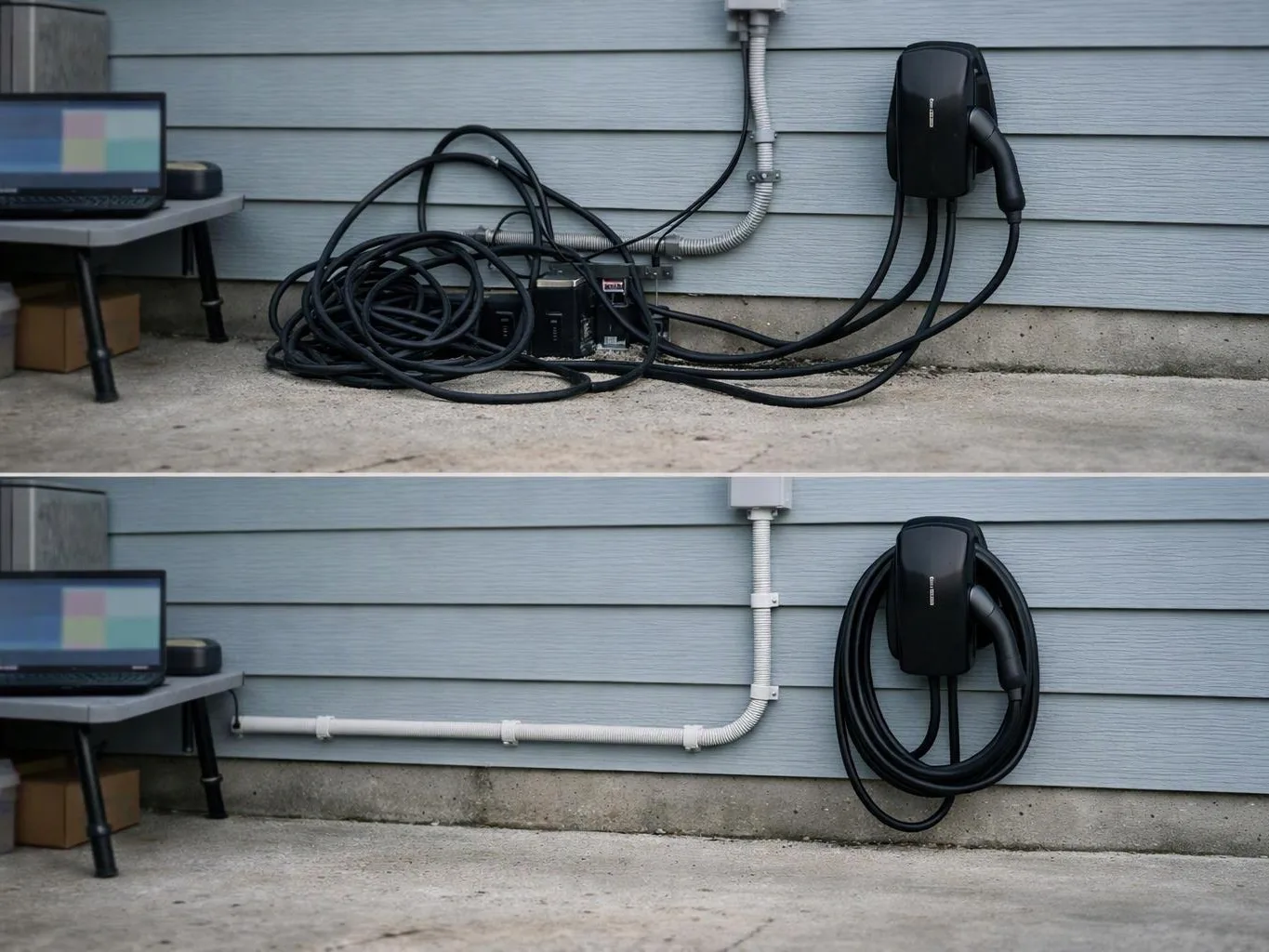
Two side-by-side views show a wall-mounted black charging unit with tangled cables before and neatly coiled after

Service Overview

Bidirectional charging system troubleshooting is a fault-finding service that checks why power cannot move safely between an electric vehicle and a connected electrical system.

  • It differs from a standard EV charging installation because the focus is on a failed transfer, warning, setting, or connection in an existing system.
  • GMB Electric provides this troubleshooting service in McCordsville for residential and commercial electrical needs.

What This Troubleshooting Work Changes

A system check separates a low battery issue from a charger, cable, or setting fault.

Fault tracing gives you a clearer repair decision before parts are changed.

Testing helps identify electrical problems that could affect safe power transfer.

A documented diagnosis helps connect later repair or installation work to the actual fault.

Process

How We Troubleshoot A Failed Bidirectional Charge

1

Record the charging symptom

We note the warning, failed start, interrupted transfer, and conditions present when the problem occurs.

2

Check vehicle capacity and status

We review the vehicle's charge state, system messages, and settings that can prevent bidirectional charging.

3

Inspect charger compatibility

We check whether the charger supports the vehicle and the intended power transfer function.

4

Test the cable and connections

We inspect the cable, plugs, terminals, and related electrical connections for a fault that interrupts the circuit.

5

Review utility control settings

We check settings and control conditions that can block power from moving into the property.

6

Explain the repair decision

We report what testing found and explain whether the next step involves adjustment, repair, replacement, or another electrical service.

How We Approach Bidirectional Charging Faults

Start with the vehicle state

The first check focuses on the vehicle's charge condition and warning messages. We then compare that information with the charger and cable response, so the diagnosis follows the actual fault.

Trace the transfer path

Power must pass through several points before bidirectional charging works. Our team checks the vehicle, charger, cable, controls, and electrical connections in a practical order.

Know when another service fits

Troubleshooting is the wrong job when the system needs a new installation, a major panel upgrade, or equipment that does not support bidirectional charging. We explain that distinction before setting a repair scope.

What Bidirectional Charging Troubleshooting Includes

GMB Electric provides comprehensive Bidirectional charging system troubleshooting in McCordsville. Here's what you get:

  • We inspect the vehicle status and charging system warnings linked to the failed start.
  • We check whether the charger supports the vehicle and the intended bidirectional function.
  • We examine the charging cable, plugs, and visible connection points for faults.
  • We review utility settings and control conditions that can block power transfer.
  • We test related electrical connections and trace the fault through the system.
  • We provide clear recommendations based on the condition we find.

Charging Faults Compared By Likely Check

These fault types point to different checks during bidirectional charging troubleshooting.

Fault typeWhat may be affectedWhat we check
Low batteryVehicle start permissionCharge state and warning message
Incompatible vehicleSupported bidirectional functionVehicle and charger compatibility
Unsupported chargerPower transfer controlCharger function and system limits
Utility settingsPermission to send power backControl settings and electrical path
Cable faultConnection between vehicle and chargerCable, plugs, terminals, and visible damage

The GMB Electric Standard

  • Urgent Assistance
  • Problem Diagnosis
  • Safe Repairs
  • Clear Communication

Questions About Bidirectional Charging System Faults

What prevents bidirectional charging from starting?

Low battery capacity can prevent bidirectional charging from starting when the vehicle protects its reserve. We check the vehicle warning, charger compatibility, cable connection, utility settings, and related electrical points. The result helps separate a vehicle condition from a charger or wiring fault. GMB Electric provides the troubleshooting service for residential and commercial systems.

What does the crew look at first during charging troubleshooting?

The vehicle charge state and warning message come first because they can block power transfer before the charger runs. We then check the charger status and cable connection. That order helps us trace the fault from the starting condition through the transfer path, instead of changing parts without testing.

How does each stage of the troubleshooting visit work?

The troubleshooting visit follows the symptom, vehicle status, charger, cable, settings, and electrical connections.

  1. We record the failed action and warning.
  2. We inspect the vehicle and charger status.
  3. We test the cable and electrical path.
  4. We explain the repair or follow-up choice.

Each stage supports the next decision.

Which charger problem can stop power transfer?

An unsupported charger can stop bidirectional power transfer even when the vehicle can accept a normal charge. We compare the charger's supported function with the vehicle and intended property connection. Compatibility, control settings, and cable condition must be checked together before equipment changes are recommended.

When should I schedule troubleshooting for a charging cable fault?

Schedule troubleshooting when the cable connection causes repeated failed starts, warning messages, or interrupted power transfer. Stop using a connection that shows visible damage, heat, or sparking. We inspect the cable and related terminals, then explain whether the issue needs cable work, electrical repair, or a separate charging installation.

Why can utility settings block bidirectional charging?

Utility settings can block bidirectional charging when the system controls do not permit power to move into the property. We review the control conditions and test the electrical path connected to the charger. In McCordsville, customers should provide any available charger messages and system settings when requesting an assessment.

What should be checked before troubleshooting is scheduled?

The vehicle warning, charger status, cable condition, and recent change should be recorded before troubleshooting is scheduled. Keep the charger accessible and avoid opening electrical equipment yourself. Photos of the charger display and cable connection can help us understand the symptom before the assessment.
Contact

Request A Bidirectional Charging Troubleshooting Estimate

Request an estimate for bidirectional charging system troubleshooting in McCordsville, and urgent requests get priority scheduling.

Empty commercial kitchen with stainless steel counters, stove, sink, refrigerator, and a touchscreen register on the right

ZIP Codes We Serve in McCordsville, Indiana

46055

Bidirectional charging system troubleshooting in Other Areas

(317) 608-1220