Skip to content

Bidirectional Charging System Troubleshooting in Noblesville, Indiana

Communication failure checks start bidirectional charging system troubleshooting in Noblesville. We trace the link between the charger, inverter, vehicle, and transfer controls.

Licensed & InsuredWarranty AvailableSame-Day ServiceUpfront, Transparent Pricing

Quick Summary: Bidirectional charging system troubleshooting in Noblesville, Indiana

Bidirectional charging system troubleshooting in Noblesville is provided by GMB Electric for charger communication faults, power transfer problems, and related electrical controls. The service supports homeowners and businesses, with 24-hour electrical service available throughout Indianapolis and surrounding communities.

  • What we do: GMB Electric provides Bidirectional charging system troubleshooting for Noblesville, Indiana homes and businesses.
  • What is included: We trace communication faults, check grid settings, test inverter operation, inspect transfer relays, and review firmware-related issues.
  • What you get: The charger identifies a safe, workable path for power transfer, or the failed part is clearly identified for repair.

Why does my bidirectional charger keep failing to transfer power in Noblesville, Indiana?

Communication failure is a leading reason bidirectional chargers stop transferring power. A fault in the charger link, inverter, transfer relay, grid setting, or firmware can interrupt the sequence. We test each part in order and explain whether the issue calls for electrical repair, control adjustment, or further equipment service.

Bidirectional charging system troubleshooting for Noblesville properties

This service is for a charger that starts, stops, refuses to transfer power, or shows a fault during a power change. The job focuses on the control path, not only the charging outlet.

We check the charger connection, inverter fault codes, transfer relay operation, grid settings, and firmware status. The buyer's main decision is whether the problem sits in the electrical system, the charging equipment, or its control software.

A standard EV charging installation may only deliver power to a vehicle. Bidirectional equipment must also send power back through the inverter and transfer controls, so a fault in one link can stop the full sequence.

  • Confirm whether the charger receives power and communicates with the vehicle.
  • Check inverter status and recorded fault codes.
  • Test the transfer relay and related control wiring.
  • Review grid settings and firmware-related symptoms.
  • Separate an electrical fault from an equipment or software issue.
A beige sofa sits beneath a ceiling fan, with a floor lamp glowing beside it in a plain room

Service Overview

Bidirectional charging system troubleshooting is a diagnostic service that finds why power will not move between an electric vehicle, charger, property, and electrical system.

  • It differs from a standard EV charging repair because the system must manage power in both directions and coordinate several controls.
  • GMB Electric provides this service for Noblesville homeowners and businesses.

What this troubleshooting changes for your charger

You get a clearer answer about why power transfer stops.

Fault tracing helps separate an electrical repair from an equipment control issue.

Testing the transfer path can identify a relay problem before other repairs are considered.

A documented diagnosis helps you discuss equipment or firmware service with the right party.

The work supports safer decisions when the system shows repeated faults or abnormal switching.

What this service helps you decide

Trace the failed communication path

We follow the signal from the charger through the inverter and transfer relay. The wrong job is a basic electrical repair when the fault is inside proprietary equipment or firmware.

Separate control faults from wiring faults

A charger may have power but still fail to transfer energy. We test the control path so the repair scope matches the actual fault.

Use the result for the next repair

Our findings show whether electrical work, equipment service, grid-setting changes, or firmware attention is the next step.

Process

How we troubleshoot a bidirectional charger

1

Record the transfer symptom

We document what the charger does, when the fault appears, and whether the vehicle and property both show normal status.

2

Trace charger communication

We check the communication path between the vehicle, charger, inverter, and transfer controls.

3

Check grid settings

We review settings that control how the system accepts and sends power.

4

Test the inverter and relay

We inspect inverter fault information and test the transfer relay’s control path.

5

Explain the repair scope

We identify the failed area and explain whether the next step involves electrical repair, equipment service, or firmware attention.

What bidirectional charger troubleshooting includes

GMB Electric provides comprehensive Bidirectional charging system troubleshooting in Noblesville. Here's what you get:

  • We inspect the charger, connected wiring, and visible control connections.
  • We trace communication between the vehicle, charger, inverter, and transfer controls.
  • We check grid settings that affect power transfer.
  • We test the transfer relay and look for a failed switching path.
  • We review inverter fault indications and firmware-related symptoms.
  • We explain the repair scope or the next equipment service step.

Where a bidirectional charging fault may sit

The symptom can point to different parts of the power-transfer path, so the diagnosis must separate each one.

Fault areaWhat we checkWhat the finding may decide
Communication linkSignals between the vehicle, charger, and inverterWhether control communication needs repair or equipment service
Grid settingsSettings that govern power acceptance and transferWhether a control adjustment belongs in the next step
Transfer relayRelay command, wiring, and switching responseWhether the transfer path needs electrical repair
Firmware issueFault behavior tied to software or equipment controlsWhether the manufacturer or equipment provider must continue service

The GMB Electric Standard

  • Urgent Assistance
  • Problem Diagnosis
  • Safe Repairs
  • Clear Communication

Questions about bidirectional charger troubleshooting

Why is my bidirectional charger not transferring power?

Communication failure can stop a bidirectional charger from transferring power. We check the charger link, inverter status, grid settings, transfer relay, and firmware symptoms.

The charger may still appear powered while the transfer command fails. We isolate the failed path and explain whether the next step is electrical repair or equipment service.

Which part of the property decides the troubleshooting scope?

The electrical service, charger connection, inverter location, and transfer equipment decide the troubleshooting scope.

  • We check access to the charger and panel.
  • We trace the wiring between the charger and transfer controls.
  • We review how the inverter connects to the property system.

A separate panel or difficult control path can add testing steps because each link must be checked safely.

Which material changes how long the troubleshooting takes?

The wiring and control equipment affect the time needed for troubleshooting. Copper conductors, older aluminum wiring, conduit access, and proprietary control cables each present different testing conditions.

We inspect the actual path before setting the scope. The material alone does not identify the fault, but access and connection quality can change how much tracing is required.

How does a troubleshooting visit move from the first call to the last step?

The visit moves from symptom review to testing, fault isolation, and a written repair discussion.

  1. We record the warning and failed power-transfer behavior.
  2. We inspect the charger, wiring, inverter, and relay path.
  3. We test the suspected control point.
  4. We explain the repair or equipment-service decision.

That sequence keeps the recommendation tied to observed system behavior.

What should I do before requesting help for a failed transfer?

Record the charger warning, note when power transfer stops, and avoid opening the equipment.

Photos of the display and visible status lights can help us understand the symptom before arrival. Include any recent panel work, EV charging installation, equipment change, or electrical outage. Do not bypass a relay or alter grid settings without guidance.

When is the problem outside electrical troubleshooting?

The problem is outside electrical troubleshooting when proprietary equipment or firmware prevents safe access to the failed function.

We still identify the electrical findings and explain what the equipment service provider needs to inspect. This distinction helps prevent unnecessary panel work when the fault sits inside the charger or inverter controls.
Contact

Request a quote for bidirectional charger troubleshooting in Noblesville

Share the charger symptom and equipment details for a quote, and urgent requests get priority scheduling.

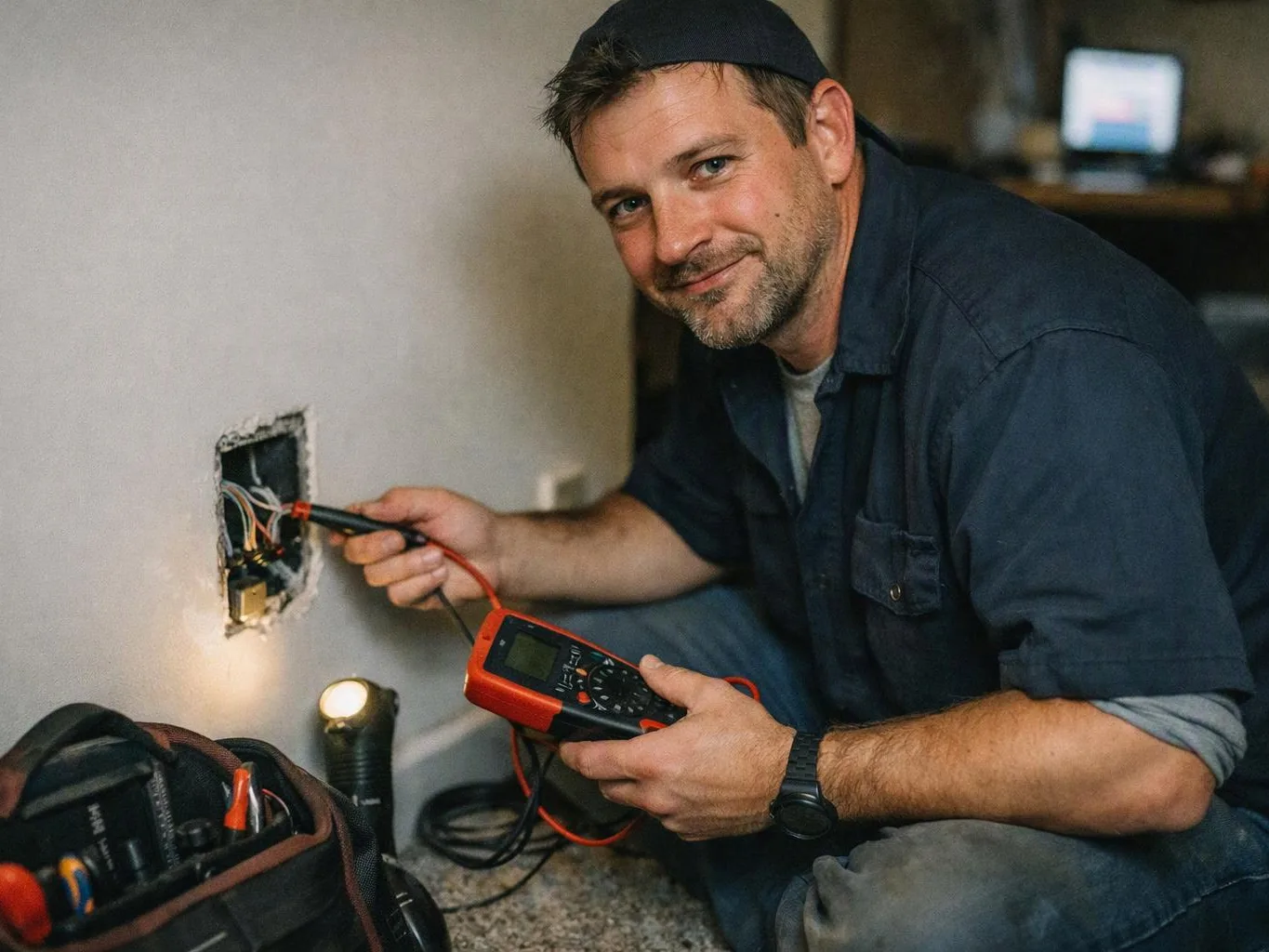
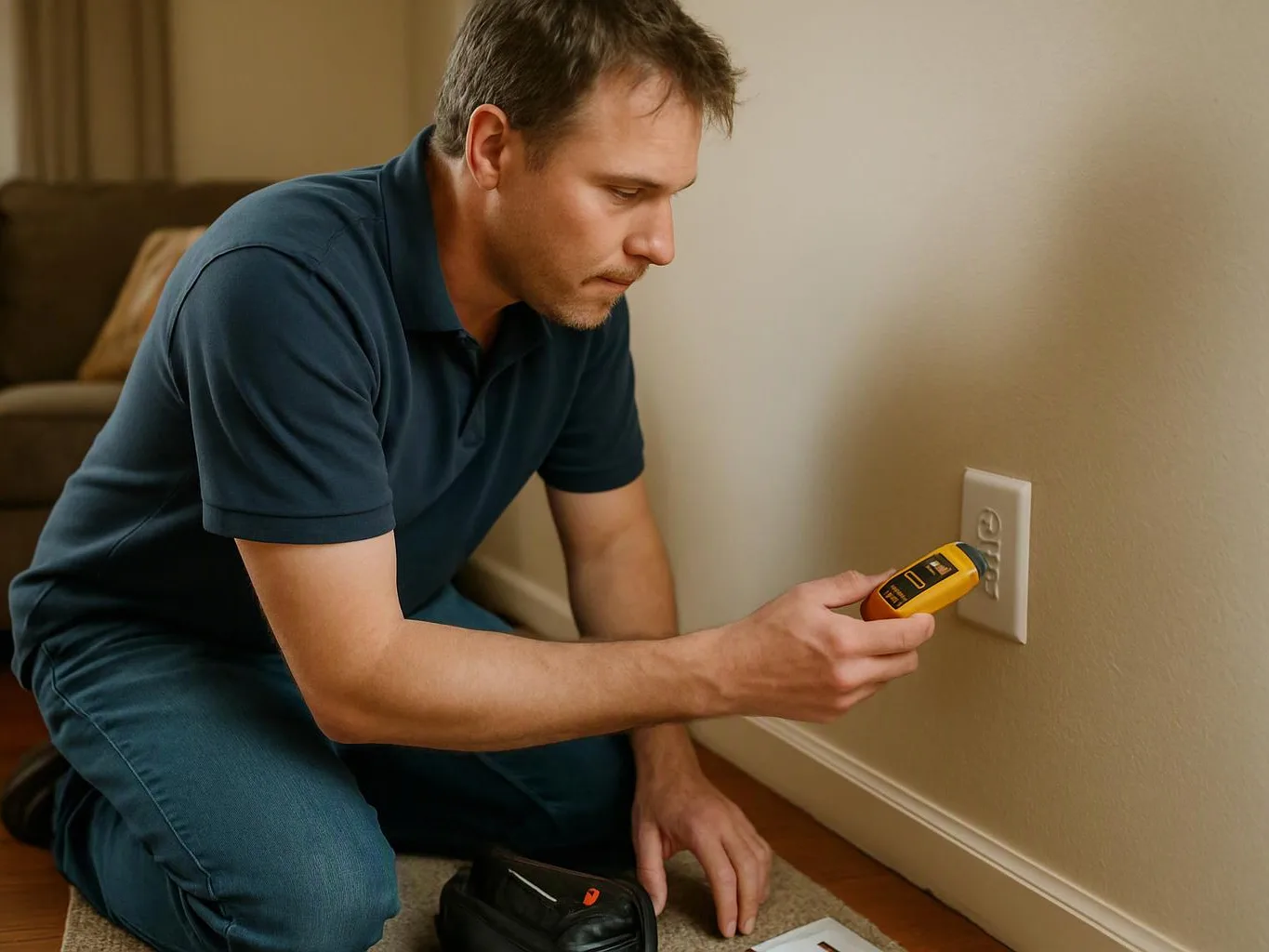
A man kneels by a wall outlet, testing it with a yellow electrical device in a living room

ZIP Codes We Serve in Noblesville, Indiana

460604606146062

Bidirectional charging system troubleshooting in Other Areas

(317) 608-1220