Skip to content

Bidirectional Charging System Troubleshooting in Rocky Ripple, Indiana

An isolation monitor warning in Rocky Ripple can stop safe power flow. We trace the charging controls and connected electrical equipment.

Licensed & InsuredWarranty AvailableSame-Day ServiceUpfront, Transparent Pricing

Quick Summary: Bidirectional Charging System Troubleshooting in Rocky Ripple, Indiana

Bidirectional charging system troubleshooting in Rocky Ripple is handled by GMB Electric for homes and businesses. The service covers fault tracing, charging controls, power flow checks, and related electrical repairs, with 24-hour electrical service available.

  • What we do: GMB Electric checks bidirectional charging equipment and related electrical circuits in Rocky Ripple, Indiana.
  • What is included: Fault isolation, circuit tracing, control checks, charging cable inspection, and electrical safety testing.
  • What you get: The customer receives a clear fault finding and a practical repair or replacement recommendation.

Why does an isolation monitor warning keep stopping my bidirectional charger?

An isolation monitor warning can stop charging when the system detects an unsafe path to ground. We check connected wiring, control signals, and equipment condition before recommending repair.
Bidirectional Charging System Troubleshooting for Rocky Ripple Properties

Bidirectional charging system troubleshooting focuses on systems that charge a vehicle and send power back to a property. The work suits homeowners, businesses, and property managers who see warning messages, failed charging, unstable backup power, or unexplained shutdowns.

The key decision is whether the fault sits in the charging equipment, the property wiring, or the control path. We trace the system in a safe order, then explain the repair scope before work moves forward.

A bidirectional system can involve power electronics, a control module, a charging cable, and a transfer switch. We check how these parts work together instead of treating one warning as the full diagnosis.

  • Identify the warning message, shutdown pattern, or failed power direction.
  • Trace the circuit from the charging equipment to the property connection.
  • Check control signals and connected electrical parts.
  • Separate equipment faults from property wiring problems.
  • Explain repair, replacement, or further electrical work before proceeding.
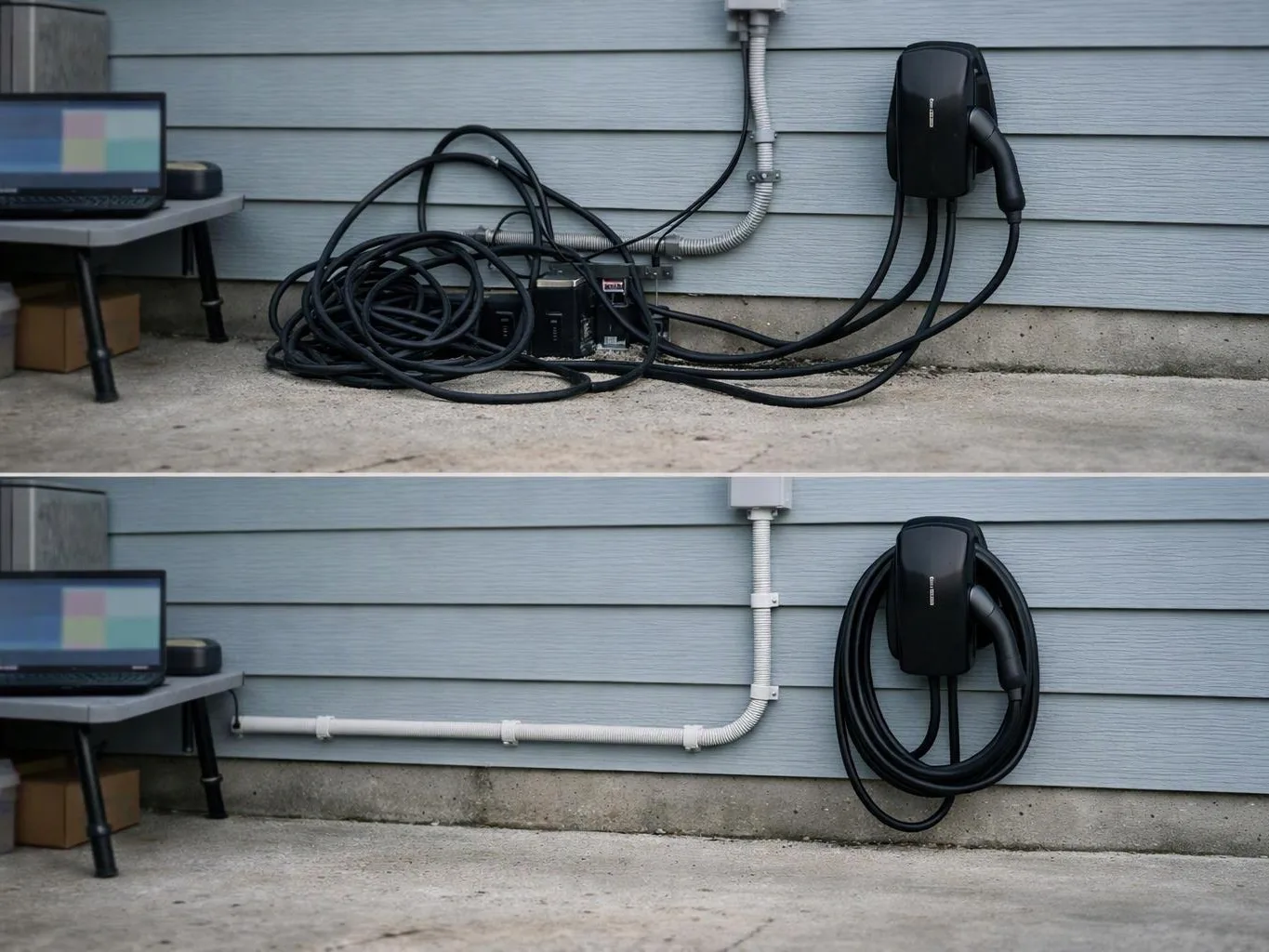
Two side-by-side views show a wall-mounted black charging unit with tangled cables before and neatly coiled after

Service Overview

Bidirectional charging system troubleshooting is a fault-finding service that checks equipment moving power in both directions.

  • This work differs from a standard EV charging installation because it diagnoses an existing power-flow problem.
  • GMB Electric provides this troubleshooting service for homes and businesses in Rocky Ripple.

What Bidirectional Charging Troubleshooting Includes

GMB Electric provides comprehensive Bidirectional charging system troubleshooting in Rocky Ripple. Here's what you get:

  • We review the reported warning, shutdown, or charging failure.
  • We inspect accessible wiring and connections linked to the charging system.
  • We trace the circuit and check power flow through the connected equipment.
  • We test control signals that affect charging and power transfer.
  • We identify whether the fault relates to equipment or property wiring.
  • We provide a clear recommendation for the next repair step.

What This Charging Troubleshooting Helps You Decide

A fault trace helps separate a failed part from a wiring issue.

Testing can prevent repeated resets that leave the system unreliable.

A clear repair scope helps you decide between repair and replacement.

Power-flow checks support safer use of vehicle-to-property charging equipment.

Commercial operators receive findings that help plan access and electrical work.

How We Approach Bidirectional Charging Faults

Start with the reported symptom

The warning message or shutdown pattern guides the first checks. We then trace the related circuit and control path. This service is the wrong job when no charging or electrical equipment needs diagnosis.

Separate equipment from wiring

A charging fault can involve the vehicle equipment or the property circuit. We check both sides of the connection so the repair recommendation matches the actual fault.

Explain the next repair step

Our licensed and insured electricians explain the finding in plain language. You receive a free estimate when the required work can be scoped from the inspection.

Process

How We Trace a Bidirectional Charging Fault

1

Record the warning and failure pattern

We begin with the displayed warning, shutdown behavior, and direction of power that failed.

2

Inspect the connected electrical path

We check accessible wiring, connections, grounding paths, and equipment linked to the charging system.

3

Trace controls and power flow

Circuit tracing follows the power and control path through the connected equipment.

4

Isolate the likely fault

We separate equipment problems from property wiring issues and note any safety concern.

5

Set the repair recommendation

We explain whether the next step involves repair, replacement, or related electrical work.

Charging Fault Areas We Compare During Diagnosis

These fault areas help show where the system problem may be located.

Fault areaWhat we checkWhat the finding helps decide
Charging equipmentPower electronics, charging cable, and related connectionsWhether the equipment needs repair or replacement
Control pathControl module signals and system commandsWhether the fault involves control or communication
Property electrical pathCircuit wiring, grounding, and transfer switch connectionsWhether related electrical repair is needed

The GMB Electric Standard

  • Urgent Assistance
  • Problem Diagnosis
  • Safe Repairs
  • Clear Communication

Questions About Bidirectional Charging System Faults

Which components are checked during bidirectional charging troubleshooting?

The isolation monitor is checked first when its warning points to a possible safety fault. GMB Electric then checks the power electronics, control module, charging cable, transfer switch, and connected wiring. The inspection follows the reported symptom and the direction of failed power. We explain which part needs repair or further testing.

How is charging troubleshooting matched to the property before work starts?

The property connection determines which circuits, controls, and transfer equipment need inspection. We review the system layout, available access, and the power direction that failed. Circuit tracing then follows the actual installation. This approach helps separate a charging equipment fault from a property electrical problem.

What should be ready before troubleshooting starts?

The warning message, equipment model, and failure pattern should be ready if they can be gathered safely. Keep access clear around the charging equipment and electrical panel. Do not open energized equipment or reset a fault repeatedly. Photos of the display and visible labels can help us plan the assessment.

Why can charging work while power transfer fails?

Charging and power transfer use different control paths, so one direction can work while the other fails. The fault may involve the transfer switch, control signal, or power electronics. We test the failed direction and compare it with the working path. That comparison helps set the right repair scope.

What part of the job changes the estimate?

The fault location and access to the connected equipment have the greatest effect on the estimate. A problem inside the charging system differs from a property wiring repair. We also consider testing needs and any related panel or circuit work. A free estimate is available when the scope can be defined.

When should a charging fault be treated as urgent?

A burning smell, buzzing electrical equipment, sparking, or visible damage makes the fault urgent. Stop using the affected equipment and keep people away from exposed parts. We handle urgent electrical calls and can assess the related charging circuit. Do not remove covers or attempt internal repairs.

What should a customer ask before agreeing to troubleshooting?

Ask which parts will be checked, what safety tests are included, and how the fault will be separated from property wiring. Ask whether the recommendation is repair, replacement, or further testing. We explain the findings and scope before planned work begins. That gives you a clear basis for the next decision.
Contact

Request a Bidirectional Charging Troubleshooting Estimate

Get a clear fault scope for your Rocky Ripple charging system, and urgent requests get priority scheduling.

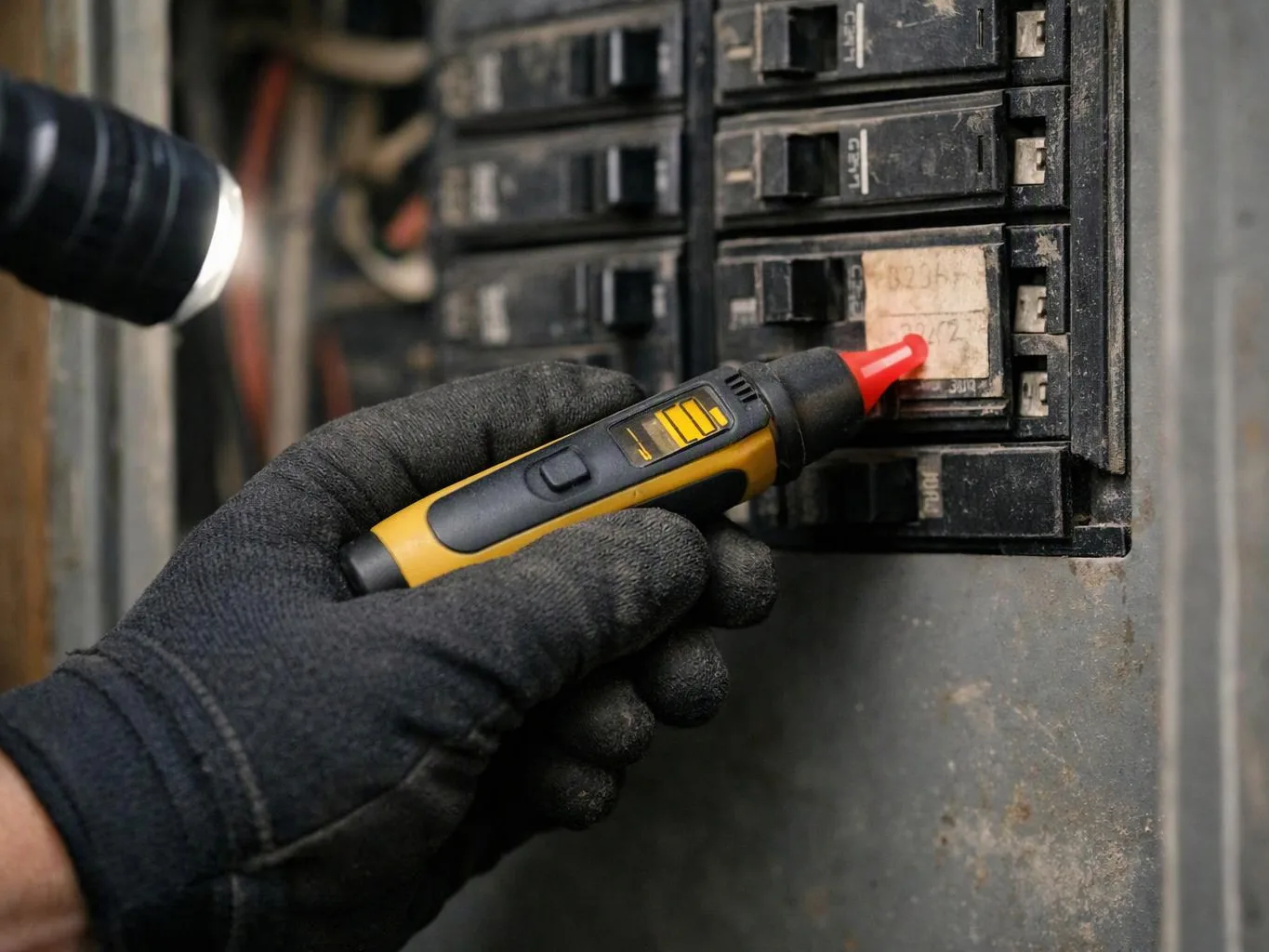
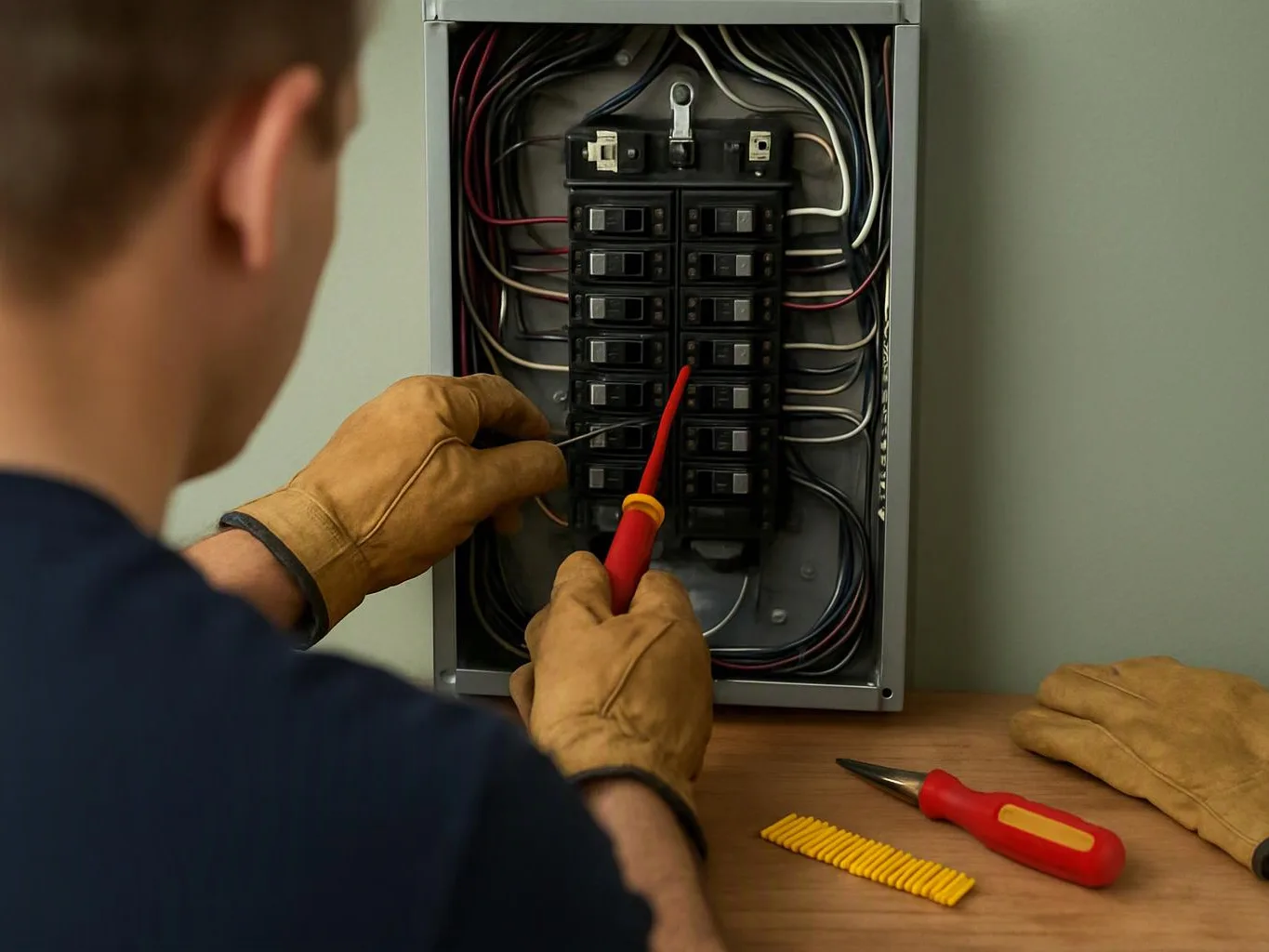
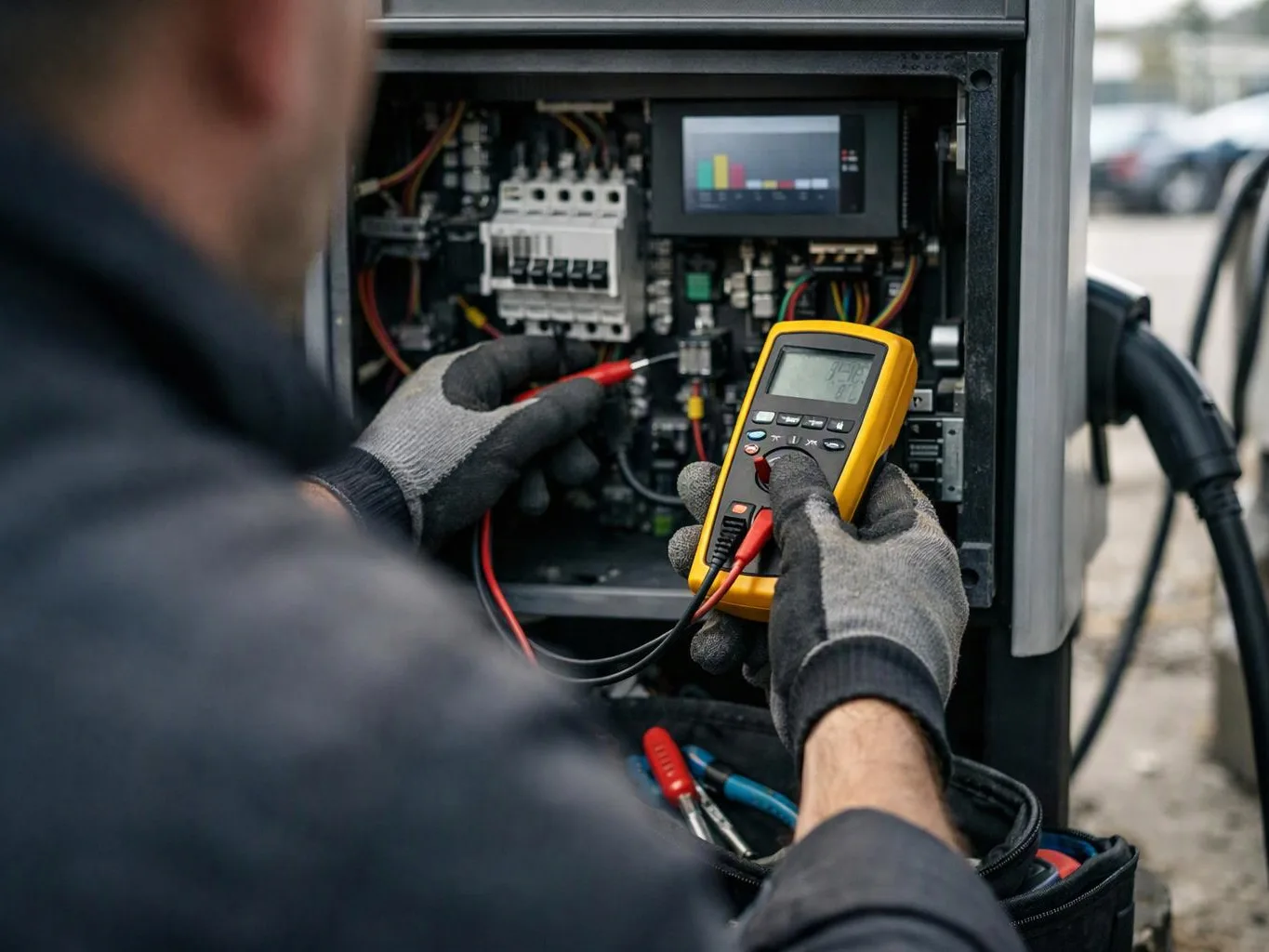
A gloved technician tests wiring inside an open electrical cabinet with a yellow meter outdoors

Bidirectional charging system troubleshooting in Other Areas

(317) 608-1220